elle a élevé la voix au-dessus de la mêlée — und dann? (SHE RAISED HER VOICE ABOVE THE MELEE — AND THEN?)
The Pigeons 1–5 and Alessandra Schiattarella welcome the audience. The theatre’s lighting technician and co-author is listened to and leaves the stage (2020)
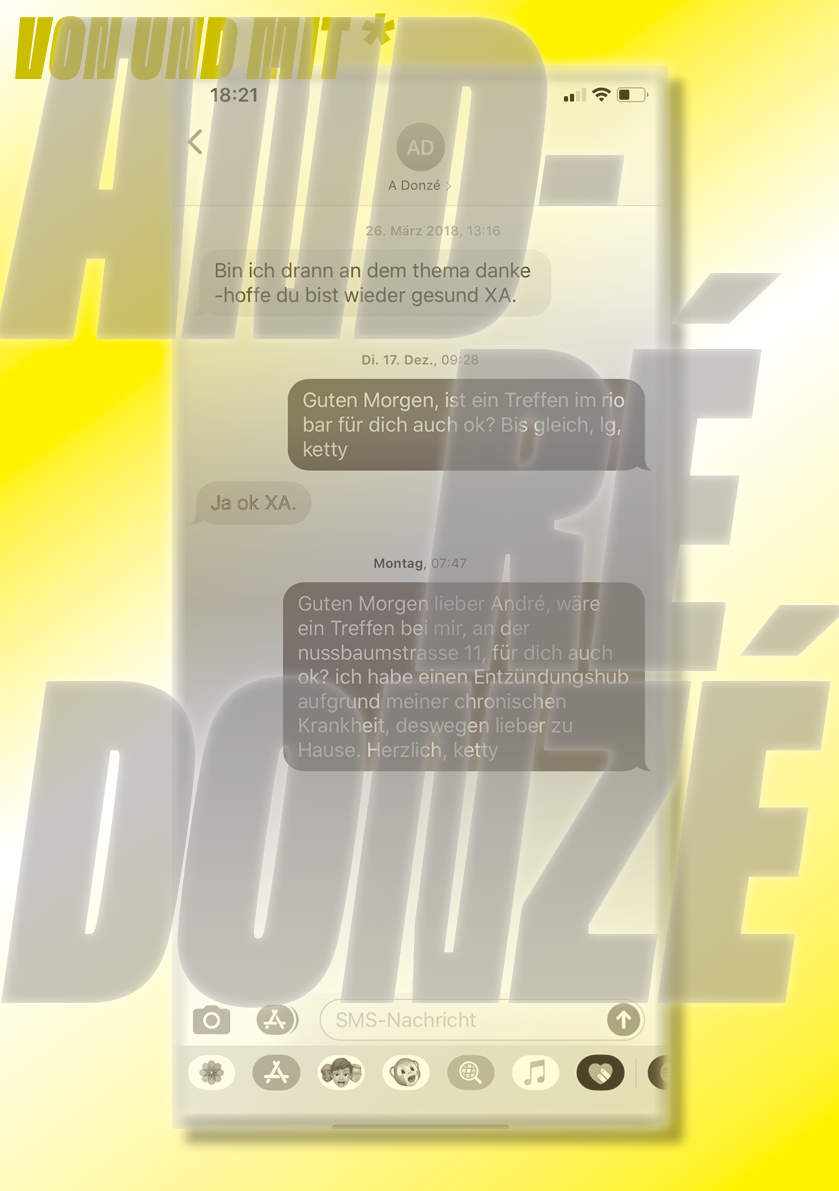
André Donzé, lighting technician at Gessnerallee and independent lighting designer , takes on co-authorship of the theatre work and consciously chooses to take a stand. In his solo, he articulates a radical assertion: the project has failed from the start, it is nothing, nothing happens here—and he himself is a miscast.
With a printed input concept and a leather office chair as his only props, Donzé develops a precise, ruthlessly honest text over six intense rehearsal days. In the quiet Wednesday performance, carried by a palpable tension in the room, his solo unfolds with remarkable clarity and consistency.
With a printed input concept and a leather office chair as his only props, Donzé develops a precise, ruthlessly honest text over six intense rehearsal days. In the quiet Wednesday performance, carried by a palpable tension in the room, his solo unfolds with remarkable clarity and consistency.
Credits
Concept and Artistic Direction:Ketty Ghnassia
By and with:
Staff of Gessnerallee:
Nailje Bedjeti, André Donzé
Staff of the Independent Scene:
Seraina Dür, Ketty Ghnassia, Jonas Gillmann, Jessica Jurassica, Alessandro Schiattarella, City Pigeons 1 (Dür & Gillmann Collective), City Pigeons 2 (Dür & Gillmann Collective), City Pigeons 3 (Dür & Gillmann Collective), City Pigeons 4 (Dür & Gillmann Collective), City Pigeons 5 (Dür & Gillmann Collective)
Set Design:
Ketty Ghnassia, André Donzé, Alessandro Schiattarella, Jessica Jurassica
Supported by:
City of Zurich Culture, Elisabeth Weber Foundation
A production of cie la mêlée in co-production with Gessnerallee
On the process-based theatre work ELLE A élévé la voix au-dessus de la mêlée – und dann?
A lot is said about deconstruction in art.With this theatrical device, it was put into practice.
The process-based theatre work addresses the theme of inclusion and operates
1) without a traditional directorial role, instead working with co-authorship from all participants,
2) with performers who only occasionally practiced acting professionally, and
3) within a timeframe that condensed the usual production processes.
Inclusion is a human matter. As many people as the budget allows are invited to take a step back and explore what fictional collectives (Wirs) might emerge from this theatrical device—and through which negotiation processes, inclusively with the audience, this would unfold.
In total, six staff members from Gessnerallee (from the cleaning specialist to the theatre directors) and 13 artists from the independent scene participated.
The structure of the performances was always the same: one co-author opened and closed the performance, while all other present co-authors acted within the framework over the course of 60 minutes.
PS:
One week before rehearsals began, the theatre management informed Ketty Ghnassia that they would only be able to participate in the rehearsal and performance days to a limited extent—or not at all. The exclusive aspect of this theatre work was that people from the higher levels of the institution were willing to engage with the initiative of an artist, agreeing to share the stage and co-author the performances. For some participants, the absence of theatre management removed a relevant motivational factor.
Weiterführende Links